
A Trip to the Redux Store!
Walk with me as we take a stroll to the store — the Redux store. For my last project, I was required to add new technology to my stack. So I chose Redux to enhance my React frontend, and here’s what I learned.
Let’s start with State (“In the beginning, there was State”). In the React context, state is an object that represents the parts of an app that can change (e.g., number counters, forms, updating lists, etc.). Each React component can maintain its own state, which resides in an object called this.
If you’ve made it this far, we can now proceed to the store and explore some really cool features.
So, what exactly is Redux? What makes it so special, especially when React is already so powerful? Simply put, Redux is a state management tool that acts as a predictable container for state. This provides your application with consistent behavior, flexibility in different environments, and makes testing much easier.
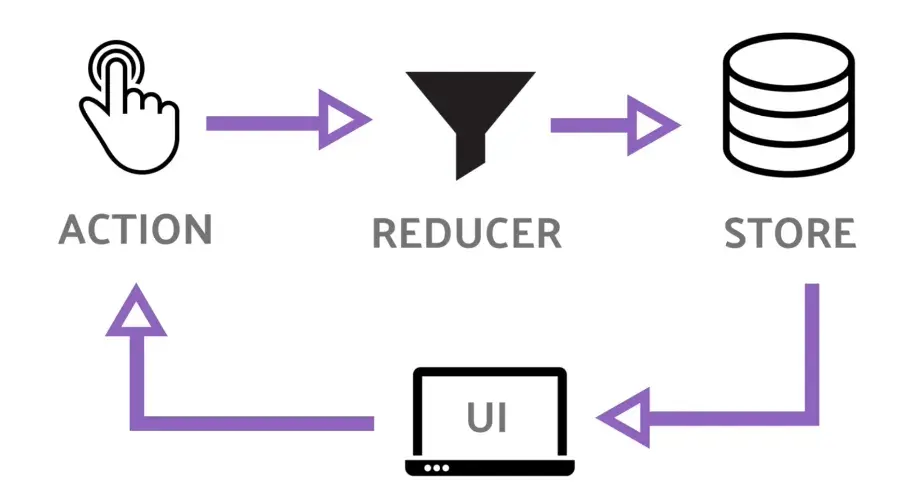
In Redux, we have components that set a template to follow for specific features, such as login or the home page. To give these components functionality, we assign them actions, which are stored in their own directory. Similarly, reducers take these actions and apply the changes to the state.
If things are starting to get a little confusing, don’t worry — you’re right at home! A React/Redux app can become very complex very quickly. To restore order, we introduce the Store, the object that brings everything together.
So, what exactly does the store do, and how does it help us?First and foremost, the store holds the state of the entire application and distributes it to components via a Provider. You can access the current state using getState(), or update the state with dispatch(action).
You can also handle user registration and unregistration processes as needed. It’s important to keep in mind that in a Redux application, you should only have a single store. If you need to split your data — for example, into separate stores for different languages — you’ll want to use reducer composition.
The Redux store can be a very powerful object, helping to make your application’s complexity much more manageable.
Now that we’ve explored the store, I hope you’ll find yourself using it even more in the near future.